
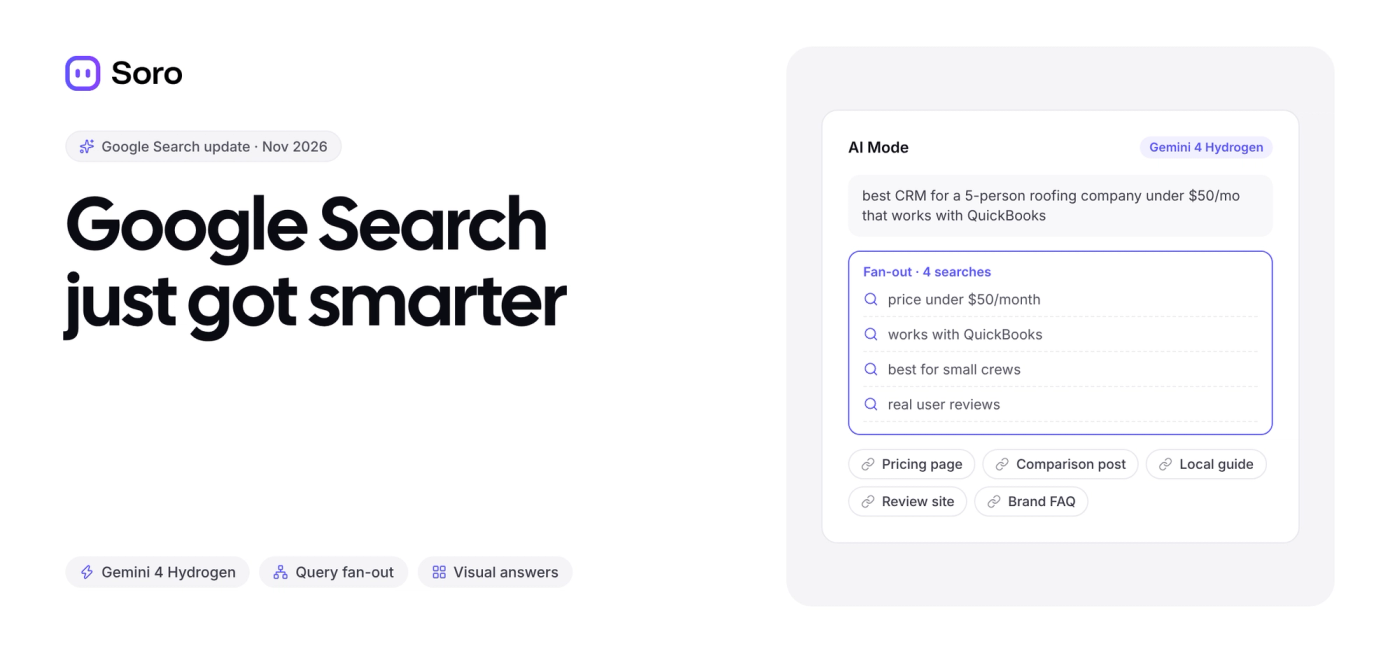
On November 12, 2026, Google replaced Gemini 3.8 Flash with Gemini 4 Hydrogen as the model behind Google Search, for all users, worldwide. Google calls it “the biggest model upgrade to Search yet.” The short version: AI answers in Search now understand longer questions, show more visuals, and pull from a wider range of websites. Here’s what Hydrogen is, what changes, and what it means for your website.
What Is Gemini 4 Hydrogen?
Gemini 4 Hydrogen is the fast, efficient model in Google’s new Gemini 4 family. It takes over from Gemini 3.8 Flash, the model most people across Google’s products were using. Google has dropped the old Pro and Flash names for elements, so Hydrogen is effectively the new Flash.
Google’s two bigger Gemini 4 models, Carbon and Argon, are built for deep, long-horizon reasoning. Hydrogen is built for speed, and according to Google’s Hydrogen announcement, it’s live in Search for all users globally from day one.
| Model | What it’s for | In Google Search |
|---|---|---|
| Gemini 4 Hydrogen | Fast, everyday model (replaces Gemini 3.8 Flash) | Default for all users |
| Gemini 4 Carbon | Frontier model for deep reasoning and long tasks | AI Mode, Google AI Ultra subscribers only |
| Gemini 4 Argon | Frontier model for deep reasoning and security work | Not announced |
Google says Hydrogen finishes tasks 2.5 times faster than Gemini 3.8 Flash and cuts fabricated claims by more than 5 times. Those are Google’s own figures, not independent tests.
What Changes in Google Search
In Google’s announcement, Robby Stein, VP of Product for Search, lists four upgrades:
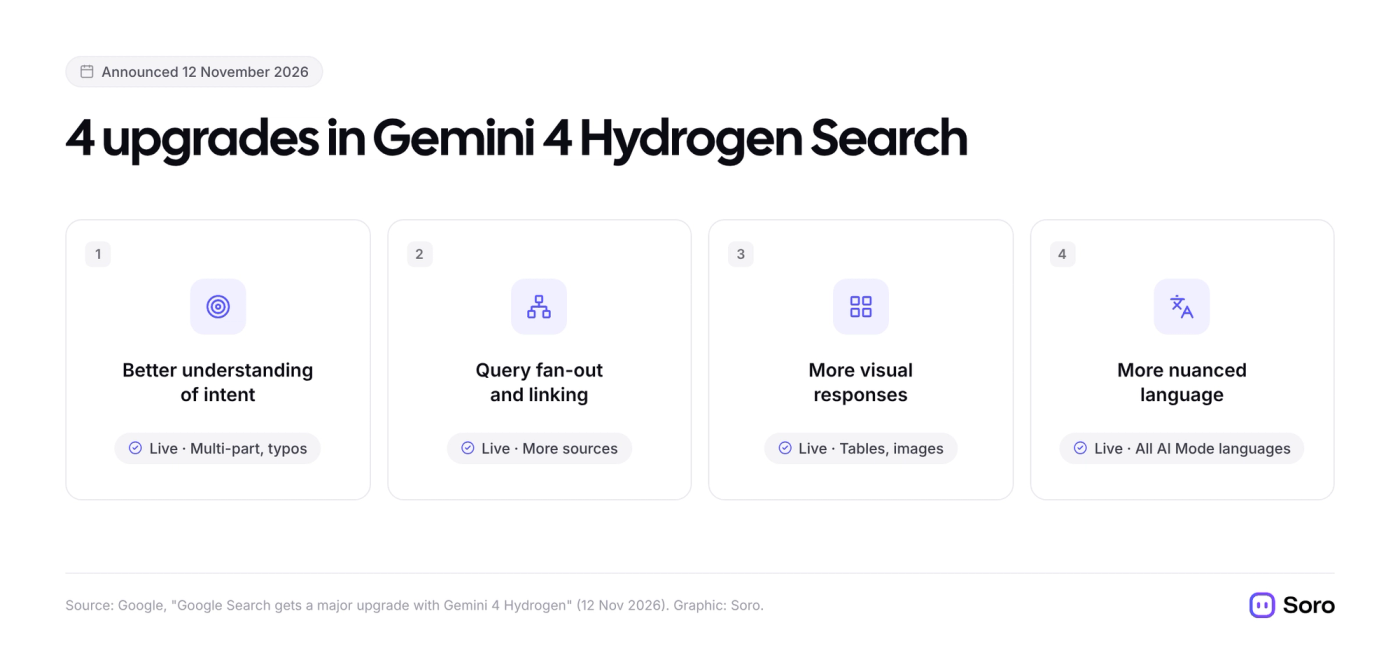
- Better understanding of intent. Search handles long, multi-part questions, typos, and very specific requests better, and answers each part of the question.
- Wider query fan-out and more links. For complex questions, Search splits the query into subtopics and searches each one at the same time. Google says Hydrogen links to a broader range of websites as a result.
- More visual answers. More images, comparison tables, and structured summaries instead of long blocks of text.
- Better answers in more languages. More nuanced responses across every language AI Mode supports.
Google’s announcements name AI Mode, not AI Overviews. Past model upgrades covered both, so expect AI Overviews to shift too, but Google hasn’t confirmed it.
What Stays the Same
Hydrogen is an upgrade to AI answers. Google hasn’t said it changes how classic blue links are ranked.
That said, Google’s November 2026 core update started rolling out on November 10, two days earlier. If your rankings move this month, the core update is the more likely cause.
Google also shared no numbers on clicks or traffic, so treat “more links” as a chance to be seen, not a guaranteed traffic bump. We covered the last round of link changes in our post on the October AI Overviews update.
Why It Matters for SEO and GEO
The change to watch is query fan-out. When someone asks a complex question, Google now runs several searches at once, and each one can cite a different page.
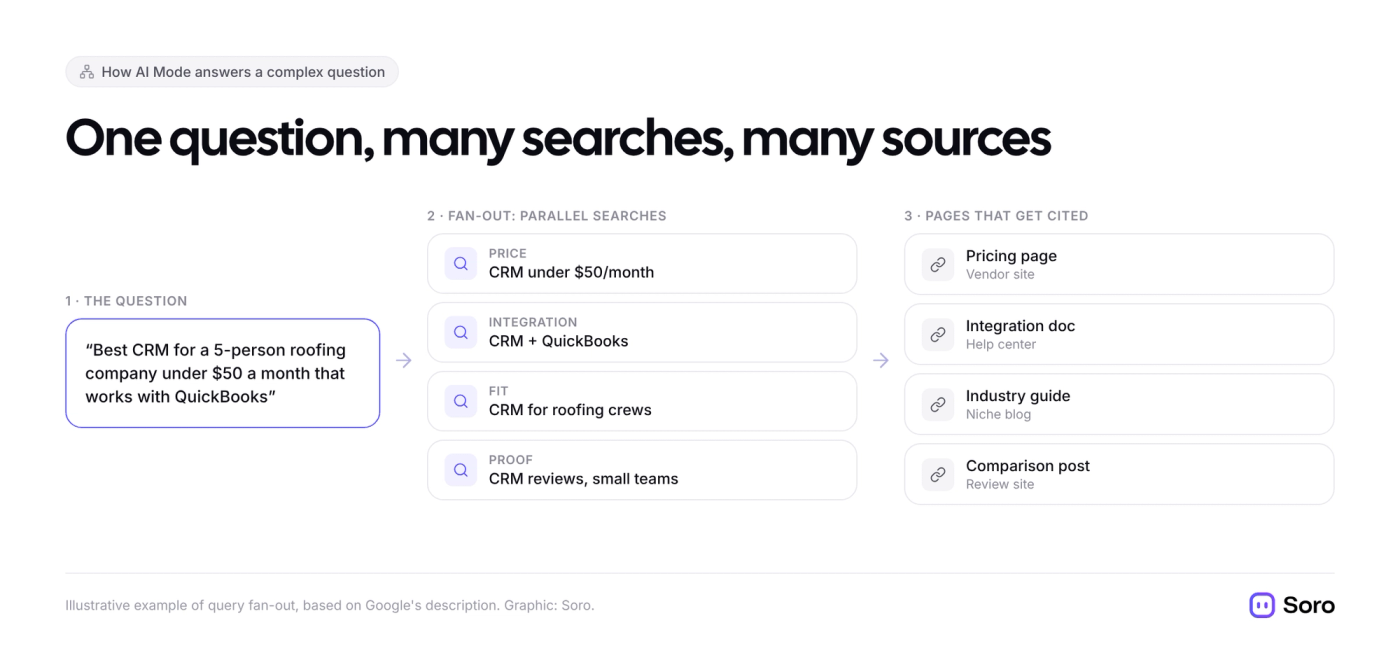
Take “best CRM for a 5-person roofing company under $50 a month that works with QuickBooks.” That’s four questions in one: price, integration, fit, and proof. A page that clearly answers just one of them now has a real chance of being cited, even if it doesn’t rank first for the full query.
That’s why this is a GEO story more than an SEO one: your rankings can stay the same while your visibility in AI answers changes. Our guide on GEO vs SEO explains the difference.
What It Means for Soro Customers
If you use Soro, you don’t need to change anything. Here’s how the update lines up with what Soro already does:
- More articles, more chances to be cited. Soro publishes articles on the topics and questions around your business. With wider fan-out, each specific article is another page Google can pull into an AI answer.
- Clear structure helps. Soro articles are written with clear headings and direct answers, which is the format Hydrogen’s more structured answers draw from.
- Better non-English answers. Soro writes in 50+ languages, and Hydrogen improves AI answers across languages, so non-English sites stand to gain too.
The one thing to check: make sure your website is connected and your articles are live. AI Mode can only cite pages it can find. If you’re not sure, open your Soro dashboard and check that your latest articles are published on your site.
What to Do Next
Here’s a short to-do list for any website owner:
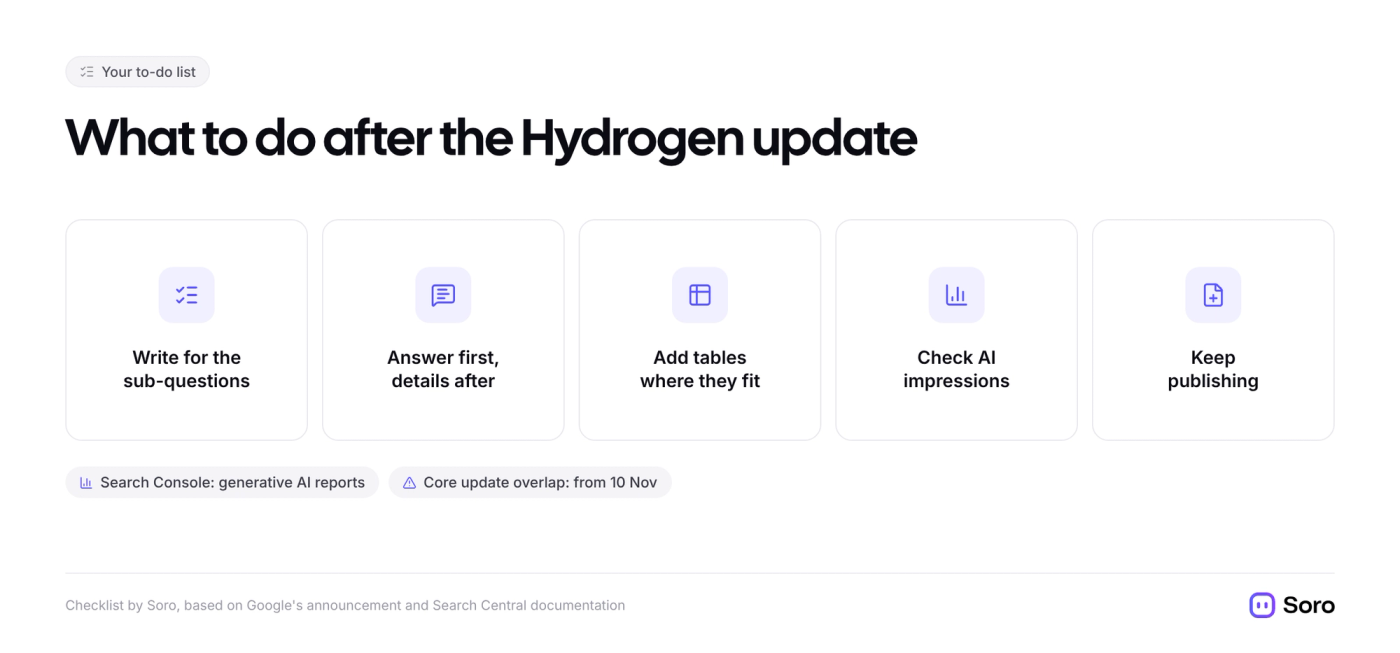
- Write for the sub-questions. List the questions behind your main topic (price, comparisons, integrations, locations) and give each its own heading. Google’s People Also Ask box is a good place to find them.
- Put the answer first. Answer in the first sentence of each section, then add detail. See our guide on writing content that ranks.
- Add tables where they fit. Pricing, comparisons, specs, opening hours. Search now builds more tables, so give it clean data.
- Check your AI impressions. Search Console’s generative AI performance reports show how often your pages appear in AI answers. Compare the weeks before and after November 12.
- Keep publishing. More fan-out means more questions, and AI can only cite pages that exist. If writing consistently is the hard part, Soro is built for that.
FAQ
What Model Did Gemini 4 Hydrogen Replace?
Gemini 3.8 Flash. Hydrogen is the new fast, everyday model in Google Search and other Google products.
When Did Gemini 4 Hydrogen Launch in Google Search?
November 12, 2026. It’s live for all users globally, in every language AI Mode supports.
Does Gemini 4 Hydrogen Affect AI Overviews?
Google doesn’t say. Its announcements name AI Mode, not AI Overviews. Past model upgrades covered both, so we expect AI Overviews to change too.
Will Gemini 4 Hydrogen Change My Google Rankings?
Google hasn’t said so. It describes Hydrogen as an upgrade to AI answers, not classic rankings. The November 2026 core update, rolling out at the same time, is a separate change that can affect rankings.
Do Soro Customers Need to Do Anything?
No. Just make sure your site is connected and your articles are live, so Google can find and cite them.