
Paid ads work like a tap. Open it up, customers trickle in. Stop paying, and it shuts off immediately. This creates a dilemma if you’re looking for ways to get more clients for your business but don’t want to run up a large bill at the end of the month. The good news is that you have plenty of alternative options. All of them cost time, rather than money. Plus, they build on themselves, retaining value and attracting customers even after you finish with them. This guide covers five channels for getting more customers, in the order SMBs should tackle them, with real data showing why each one works.
So, whether you’re a plumber from Wisconsin, a law firm from Baltimore, or a gardening firm in California, there’s something for everyone. If you're comparing ads and free methods directly, SEO vs Paid Ads: An Honest Comparison for Small Business goes deeper.
Start With the Customers You Already Have
The fastest answer to “How to get more customers?” is often to start with the customers you already have. They know and trust you and won’t need extra convincing.
Research by Bain & Company's Fred Reichheld concluded that in financial services, a 5% increase in customer retention results in more than a 25% boost to profits.
Exact numbers differ by industry, so don’t expect gardening services, electrical work, or auto shops to fit the same model. Still, the logic holds true for ~95% of industries: keeping a customer is cheaper than finding a new one.
How to Bring Customers Back?
Here are 3 simple ways to attract past customers back:
- Follow up after the job’s done. A short message a week later (“Hey, how's the new boiler running?”) keeps you in their mind for the next job they or their neighbor might need.
- Remind them when it’s time. Dentists do these with check-ups. Lawn watering system maintenance experts inform their clients before it’s wintertime. Whether you’re a roofer, a pet groomer, or an accountant, you can do the same with annual inspections, regular trims, or tax deadlines, just to name a few.
- Start with an email list, even if it’s small. In Litmus' 2025 survey of marketers, 35% of companies said they got back $10–$36 for every $1 spent on email, and another 30% got $36–$50. A monthly note with one useful tip and one offer can be enough. The potential ROI is too great to ignore.
Turn Happy Customers Into Referrals
A referral is a customer who arrives already trusting you. The average value of a referred customer can be at least 16% higher than that of a non-referred one with similar demographics. The same study of around 10,000 customers also concluded that referred customers were more likely to stay.
If you want to know how to get more customers, you should know that most of your already happy clientele never referred you to anyone because nobody asked. Make it easy.
- Ask at the high point. The natural moment is right after a finished job or a compliment.
- Give them something to pass on. A short text they can forward, a card with your number, or a discount code works better than “tell your friends”.
- Say thank you properly. A discount for their next purchase/visit/order, a small gift, or even a handwritten note goes a long way. People who feel appreciated and have a nicer customer experience refer again.
- Team up with neighboring businesses. A wedding photographer and a florist, or a plumber and a kitchen fitter, serve the same customers at different times. Refer to each other, and you can quickly gain recommendations and a steadier stream of potential customers.
Attract Customers With Your Google Business Profile (GBP)
If people search for what you do + “near me”, your Google Business Profile (the thing that shows up on Google Maps and in local results) will be the first thing they see. It’s free to manage, and it’s one of the most underused answers to the question “How to attract customers locally?”
An example of how the Map Pack looks and how your business can stand out.
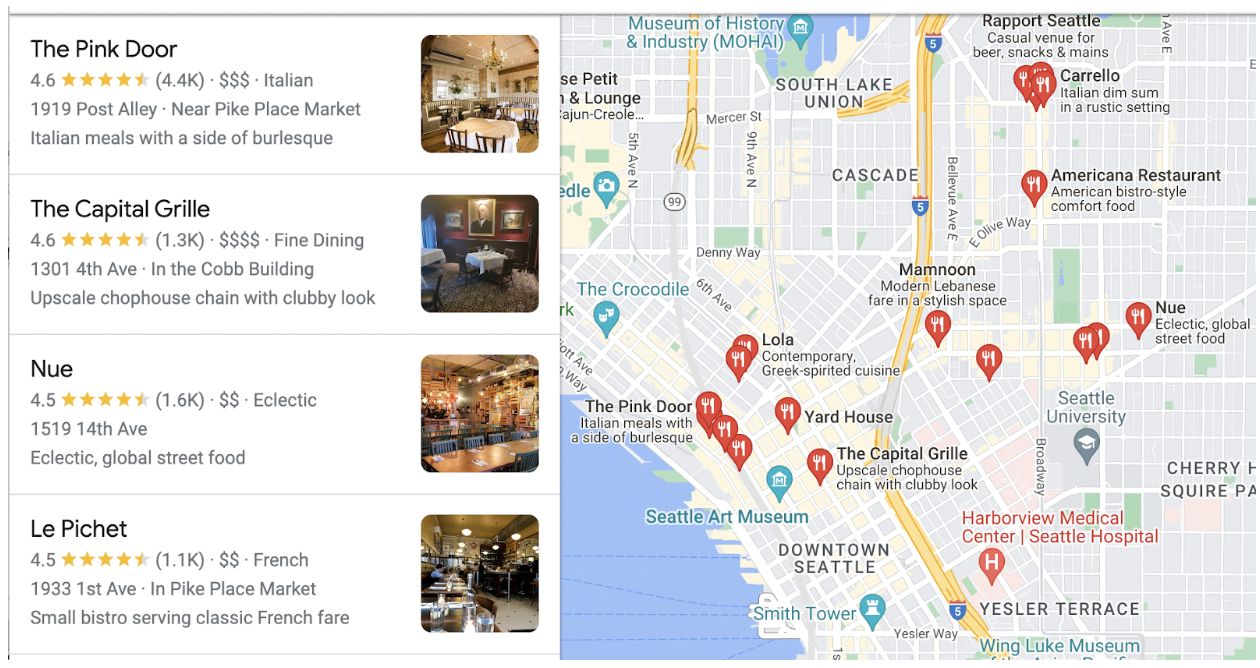
Source: Search Engine Journal
We’ve quoted this stat in a few of our blogs, but it’s one that is worth repeating. Google states that customers are "2.7 times more likely to consider a business reputable" when they find a complete profile, and "70% more likely to visit" in real life.
Google also makes clear that you can’t buy your way up this list. Local results are based mainly on relevance, distance, and prominence. The latter factor includes how many reviews you have and how positive they are.
A quick checklist for any Google Business Profile:
- Correct NAP (name, address, phone number) – include opening hours, including those for holidays.
- Right main categories – include every service you offer, written in a way your customers could describe and understand them.
- Real photos – genuine snapshots of your work, your team, premises, car park, etc. The key is to add them regularly (at least a few pics each quarter).
- Description – who you help, where, and what makes you different.
Google makes it super easy to manage this. Go to Google’s Business Profile link and claim it. An image below shows how it should look once everything is set up.
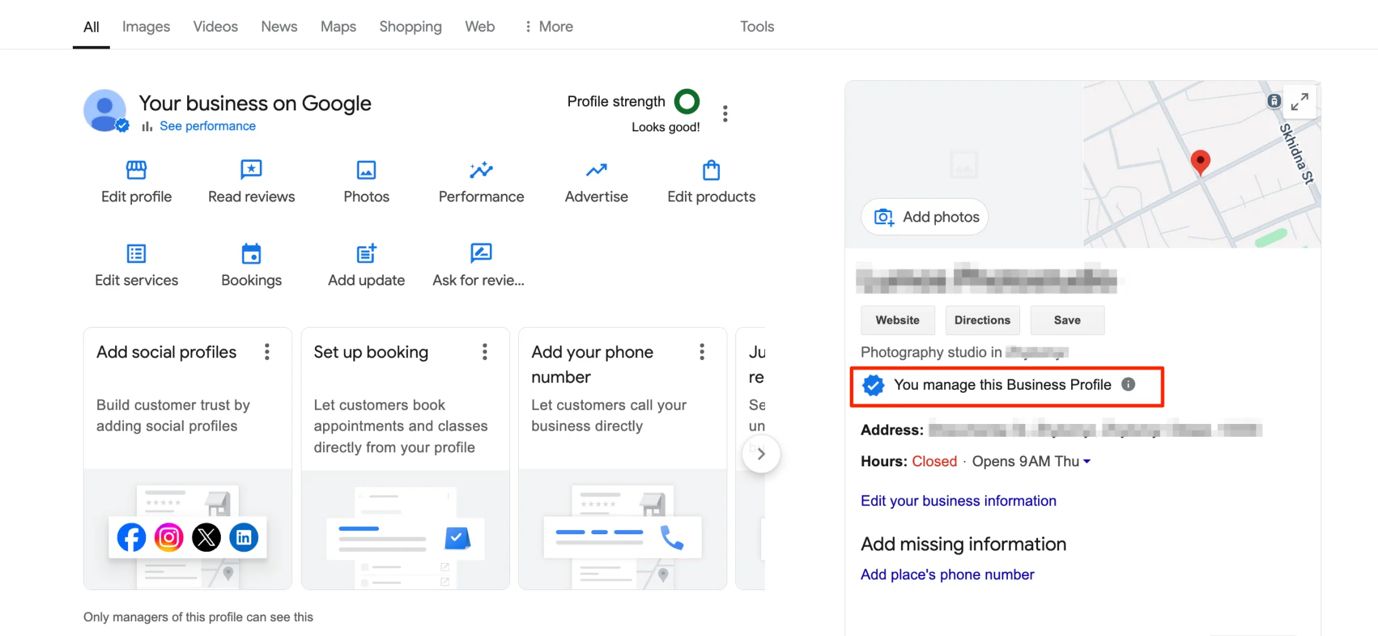
Source: seranking.com
For the full local picture, see Local SEO for Small Business: The Only Guide You Need.
Reviews: The Cheapest Way to Get More Clients for Your Business
First-time business owners should know that reviews do two jobs at once. They help you show up on Google, and they convince people to buy/choose once they find you. Numbers only solidify these claims. BrightLocal’s 2026 survey found these things about US consumers:
- 97% read reviews for local businesses.
- 47% won’t use a business with <20 reviews.
- 74% look at reviews from the past 3 months.
- 89% expect owners to respond to reviews.
The most useful finding in that survey was that 83% of people who were asked to leave a review went on to leave one. So, when you look for how to get more clients for your business, you should understand that it’s most often just a problem of not asking.
If we could give you one piece of advice, we’d say keep replies personal. Templated or generic responses make 50% of consumers unlikely to choose a business.
Content That Brings Clients to You
Think about it – every day, people type in questions into Google that your business could answer: “How much does plumbing cost?” “Do I need a lawyer in X situation?” “What’s the best way to decorate my garden?” A page on your website that provides an answer to one of those can bring in customers for weeks, months, or years, even without making you pay for a single click.
The catch is that most businesses never get to that point. Ahrefs looked at 14 billion pages and found that 96.55% of them get 0 traffic from Google.
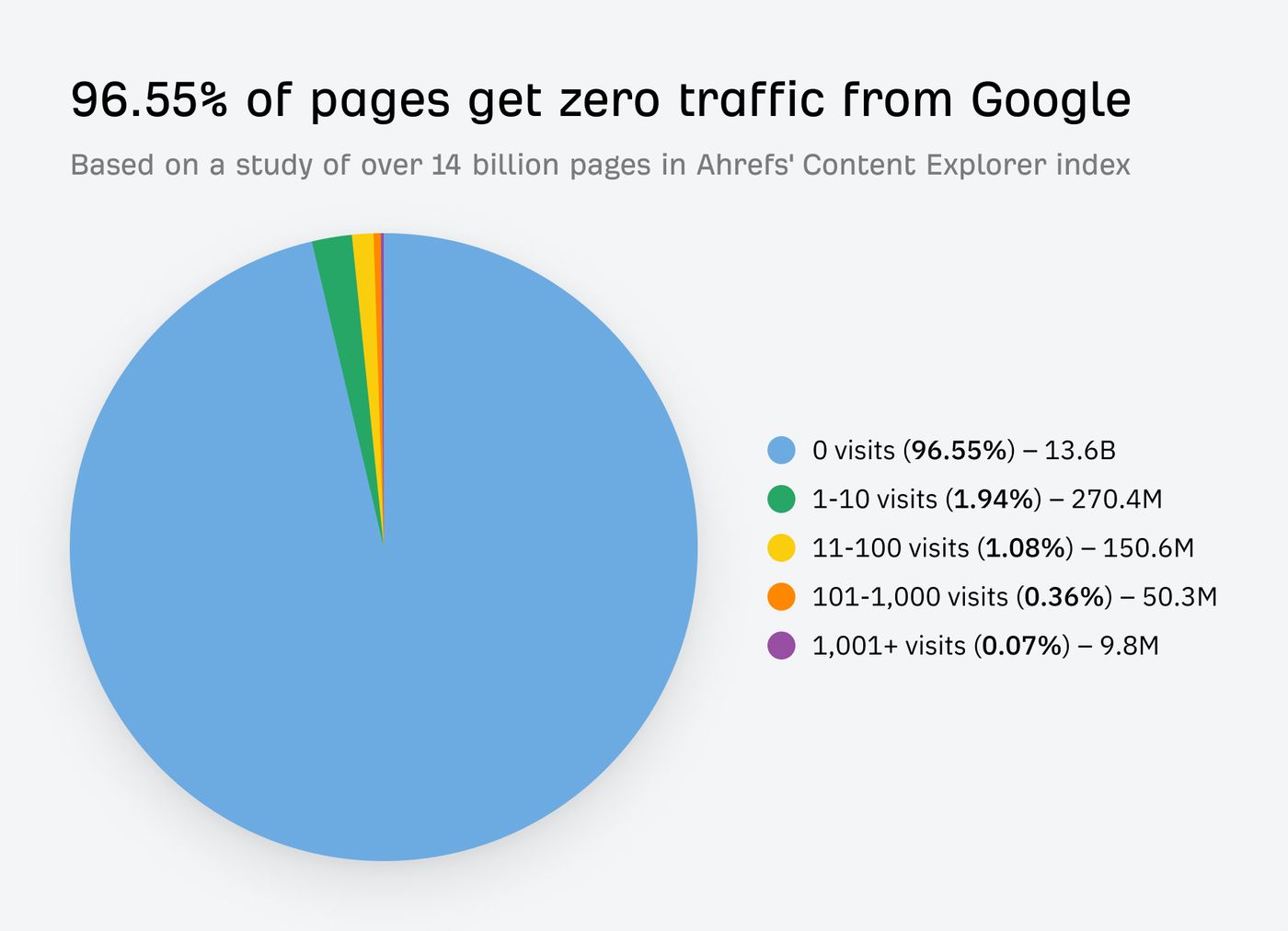
Source: Ahrefs — Search Traffic Study
Why is that? The main reasons are targeting something nobody searches for, having no other sites link to it, or not meeting search intent.
Your business can avoid that and join the ~3.45% of websites that get traffic by:
- Writing about the exact questions people ask you over the phone (1 question per page)
- Optimizing content for AI engines by writing in simple, factual language
- Publishing blog updates regularly
- Adding simple product descriptions that contain target keywords
- Adding relevant internal and external links to blogs
Yes, writing takes time, and we know that this is where most owners will stop. You can write one article a month yourself, hire a freelancer, or use a tool that handles research, writing, and publishing.
Soro is built to make writing as automated as possible, with no micromanaging. You can connect it to your website, and it will research and publish SEO-optimized content automatically, on schedule. If you also want to know how long it takes to see results, read How Long Does SEO Take?
30 Minutes/Week DIY Plan: How to Get More Customers for Your Business
Luckily, you don’t need to do all at once. We think this routine, which takes ~30 minutes per week, should help you build a solid foundation.
| Time | Task | Why? |
|---|---|---|
| 5 min | Email or text a review link to every customer from this week | Most people leave a review when asked |
| 5 min | Reply to every new review | Customers expect responses and notice when they're missing |
| 5 min | Add one new photo or post an update to your Google Business Profile | Keeps your listing complete and current |
| 5 min | Ask one happy customer or partner business for a referral | Referred customers tend to stay longer |
| 10 min | Write down one question a customer asked this week | It will be your next article or FAQ page |
Do this for 3 months and then look at where your new customers are coming from. Finally, double down on what’s working.
FAQ
What's the Fastest Way to Get More Customers Without Ads?
It’s smart to go back to the people who already know you. Past customers and their referrals won’t need extra convincing so that a follow-up can bring in new work within days. While reviews and content are good ways on how to attract customers, they take time to build.
How Many Reviews Do I Need?
There isn’t a single magic number, but the BrightLocal survey we mentioned in this blog found that consumers avoid using businesses with fewer than 20 reviews. Plus, 74% look for reviews from the last 3 months. Thus, aim for a steady flow rather than a one-off push.
Is My Google Business Profile Enough on its Own?
It's the best place to start for a local business, but it works best alongside a website or its blog section that answers customer questions. Your profile gets you found on Maps, while your website content gives people a reason to choose you over the next listing.