
Most content doesn't rank because it misses one of three things: it doesn't match what searchers want, it doesn't cover the topic well enough, or it's structured in a way search engines can't parse.
Fix those three problems and you'll outrank most of your competition. Not because you're gaming an algorithm, but because you're actually creating better content.
Here's how the process works.
Start With What People Actually Search
Every piece of content needs a target keyword. Not a vague topic - a specific phrase people type into Google.
Finding good keywords requires understanding three factors:
Search volume - How many people search this monthly. Higher isn't always better - a 50-search keyword with buyer intent beats a 5,000-search keyword with no commercial value.
Difficulty - How hard it'll be to rank. This depends on your site's authority. A new site won't rank for "best CRM software" but might rank for "best CRM for freelance consultants."
Intent - What the searcher actually wants. This determines what type of content to create.
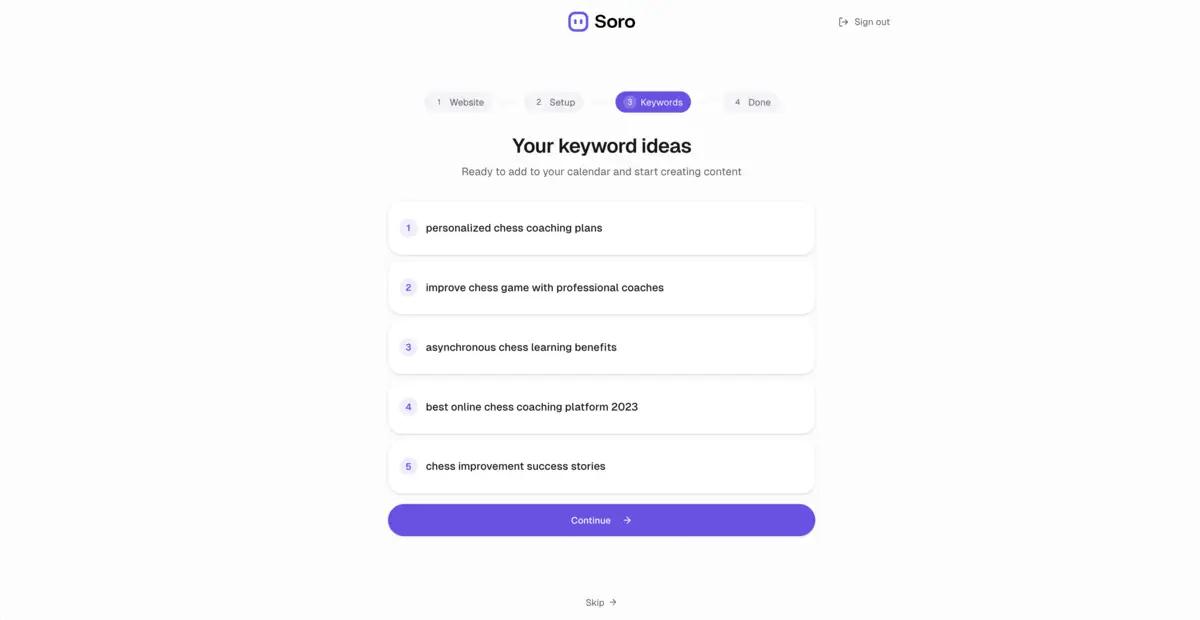
Pro Tip: Use Soro's keyword research to find the first keywords you can realistically rank for - it automatically identifies low-competition opportunities that match your site's authority level.
Match the Intent or Don't Bother
Google's job is matching content to what searchers want. If your content doesn't match intent, it won't rank - no matter how good it is.
Search intent breaks into four categories:
Informational - Searcher wants to learn something. "How does SEO work" or "what is keyword research." Create educational content: guides, explanations, tutorials.
Commercial - Searcher is researching before buying. "Best SEO tools" or "Ahrefs vs SEMrush." Create comparisons, reviews, "best of" lists.
Transactional - Searcher wants to buy. "Buy SEO software" or "Ahrefs pricing." Optimize product and pricing pages.
Navigational - Searcher wants a specific site. "Ahrefs login." You can only rank for navigational queries about your own brand.
The format matters as much as the information. If the top results for your keyword are all comparison posts with tables, writing a narrative essay won't rank even if it's better written.
Check the current top 10 results for your keyword. Notice what format they use. Match it.
Helpful Content Beats Keyword Stuffing
Google rolls out algorithm updates constantly - core updates, helpful content updates, spam updates. The specifics change, but the direction is always the same: reward content that genuinely helps readers.
This is why tools that just "write for keywords" are a trap. Stuffing an article with search terms might have worked in 2015. Today, Google is sophisticated enough to detect when content exists purely to rank rather than to help.
What matters now:
Time on page - When readers spend 8 minutes on your article instead of bouncing after 30 seconds, that signals to Google your content actually delivered value. You can't fake this with keyword density.
Engagement depth - Do people click through to related articles? Do they scroll to the end? These behavioral signals tell Google whether your content satisfied the search intent.
Not being salesy - Readers can smell a pitch. If every paragraph pushes your product, they'll leave. Genuinely helpful content that occasionally mentions your solution performs better than content that reads like an advertisement.
The irony is that forgetting about SEO while creating useful content often produces better SEO results than obsessing over optimization. Write something your reader will thank you for, and the rankings tend to follow.
Stay In Your Lane
Here's something most SEO advice ignores: topical authority matters.
Google increasingly evaluates whether your site has expertise in the subject you're writing about. A law firm's blog about legal topics carries weight. That same law firm writing about real estate investing tips? Google notices the mismatch.
This is why building a brand around specific expertise works better than chasing any keyword with traffic potential.
Write about what you actually know:
- If you're a SaaS company, write about your industry and the problems you solve
- If you're an accountant, stick to finance, taxes, and business topics
- If you're an e-commerce brand, cover your product category deeply
What happens when you stay focused:
- Your internal links create a coherent topic cluster
- Readers recognize you as an authority in that space
- Google sees consistent expertise signals across your content
- Each new article strengthens your site's authority on that topic
What happens when you don't:
- Random topics confuse Google about what your site is actually about
- You compete against established authorities in every new topic
- Your content looks opportunistic rather than expert-driven
- Reader trust erodes when you're clearly out of your depth
The best content strategies go narrow and deep, not wide and shallow. Own your niche before expanding.
Cover the Topic Thoroughly
Thin content doesn't rank for competitive keywords. Search engines want comprehensive resources that fully answer the query.
"Comprehensive" doesn't mean long for the sake of length. It means covering all the subtopics a searcher would expect.
To find what to cover:
- Look at the top 5 ranking pages for your keyword
- Note every subtopic they address
- Your content needs to cover all of those
- Then add something they missed - a unique angle, better examples, more recent data
If every competitor has a section on "common mistakes," you need that section too. If none of them address a relevant subtopic you know about, that's your opportunity to be more complete.
Word count is a proxy for comprehensiveness, not a goal. A 3,000-word article that covers everything beats a 5,000-word article with filler. But a 500-word article rarely beats a 3,000-word article on competitive keywords because it can't cover enough ground.
Structure Content for Scanning
People don't read web content linearly. They scan for relevant sections, then read what they need.
Search engines do something similar - they parse structure to understand what content covers.
Headings matter:
- One H1 (your title)
- H2s for major sections
- H3s for subsections
- Include keywords in headings where it's natural
Format for scanning:
- Short paragraphs (2-4 sentences)
- Bullet points for lists
- Bold for key terms
- Tables for comparisons
Answer questions directly:
If your section heading is "How long does SEO take?" - the first sentence of that section should answer it. "Most sites see results in 3-6 months." Then elaborate.
This structure isn't just for readers. It helps you earn featured snippets - those answer boxes at the top of search results.
On-Page Optimization That Matters
Some on-page factors affect rankings. Others are outdated advice that wastes time.
What actually matters:
Title tag - Include your keyword, keep it under 60 characters, make it compelling enough to click. The title is what shows in search results. It affects both ranking and click-through rate.
Meta description - 150-155 characters summarizing the page. Doesn't affect ranking directly, but affects clicks. More clicks signal quality to Google.
URL - Short, includes keyword, uses hyphens. /seo-content-creation not /blog/2024/01/the-complete-guide-to-creating-seo-content-that-ranks
Internal links - Link to related content on your site. Use descriptive anchor text. This helps search engines understand your site structure and passes authority between pages.
External links - Link to authoritative sources when citing claims. Opens in new tab, use nofollow for anything uncertain.
What matters less than people think:
Exact keyword density - Use your keyword naturally. Don't count instances. If you're writing comprehensive content about a topic, you'll include the keyword enough.
Meta keywords - Google hasn't used this for over a decade.
Word count targets - Cover the topic thoroughly. The word count will be what it needs to be.
Technical Factors That Kill Rankings
You can write perfect content and still not rank if technical issues block it.
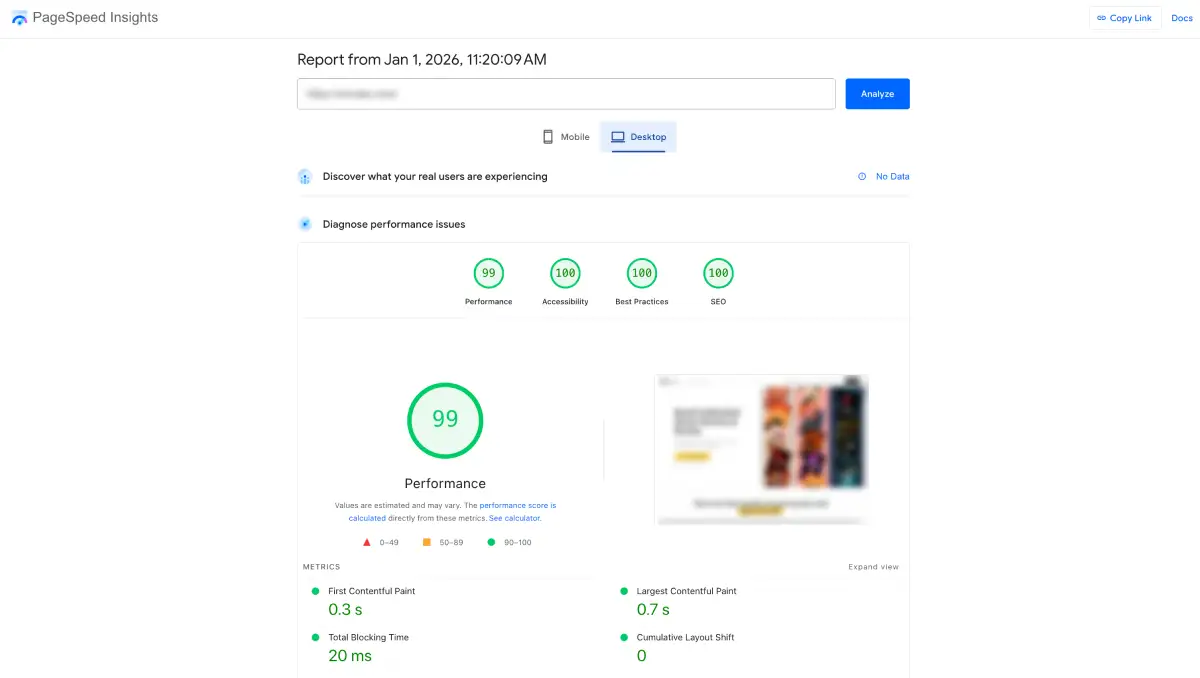
Page speed - Slow pages rank worse and have higher bounce rates. Compress images, enable caching, minimize code bloat. Test with PageSpeed Insights.
Mobile usability - Over 60% of searches happen on mobile. If your site breaks on phones, rankings suffer.
Crawlability - Search engines need to access your content. Check that your robots.txt isn't blocking important pages and your sitemap is submitted to Search Console.
Core Web Vitals - Google's metrics for page experience. LCP (loading), FID (interactivity), CLS (visual stability). Poor scores hurt rankings.
These issues often require developer help to fix. But identifying them is the first step.
The Content Production Bottleneck
Here's the uncomfortable truth about SEO content creation: one great article isn't enough.
Research from Ahrefs shows sites publishing 4+ times weekly see 3.5x more traffic than those publishing weekly.
That's because more content means more keywords, more internal linking opportunities, and more chances to match various search intents.
But producing that volume manually is expensive. A well-researched, well-written article takes 4-8 hours. Hiring writers costs $100-500 per piece. Most teams hit a ceiling.
This is where automation changes the equation. Tools like Soro can handle keyword research, content generation, and publishing automatically - producing in a day what would take a writer a week. Check out our complete guide to SEO automation software for detailed comparisons of the best tools.
The quality question is valid. But modern AI writing, properly configured with brand guidelines, produces content that's indistinguishable from human work. The limiting factor has shifted from "can AI write well enough?" to "did you set it up correctly?"
Measuring What Works
Publishing is half the job. The other half is measuring results and improving.
Track these:
- Organic traffic by page (Google Analytics)
- Keyword rankings over time (Search Console or paid tools)
- Engagement metrics - time on page, bounce rate
- Conversions from organic traffic
Timeframes:
New content typically needs 3-6 months to reach its ranking potential. Don't judge a piece at 30 days.
When to update:
- Rankings dropped below position 10
- Information became outdated
- Competitors published something better
- Search intent shifted
Updating old content often produces faster results than creating new content. A page that's already indexed and has some authority can improve faster than a new page can rank from scratch.
The Process, Summarized
- Find a keyword with reasonable volume, achievable difficulty, and clear intent
- Check intent by reviewing current top results
- Outline thoroughly - cover everything competitors cover, plus something unique
- Write for scanners - clear structure, short paragraphs, direct answers
- Optimize on-page - title, URL, meta description, internal links
- Fix technical issues - speed, mobile, crawlability
- Measure and iterate - track rankings, update what stalls
Do this consistently and you'll outrank competitors who publish sporadically or skip steps. SEO rewards consistency and thoroughness more than any single trick.
Related reading:
- Affordable SEO for Small Business: A Beginner's Guide - Budget-friendly tactics that deliver real results
- Best SEO Automation Software in 2026 - Tools to scale your content production