
Enterprise SEO agencies charge $5,000-20,000 per month. For most small businesses, that's not a marketing expense - it's a fantasy.
But ignoring SEO isn't an option either. Your competitors ranking on page one for "plumber near me" or "accounting services Boston" are capturing customers who never see your business. Organic search drives 53% of all website traffic.
The gap isn't about budget. It's about knowing which SEO tactics deliver returns at small scale and which ones are enterprise-only plays. Here's what actually works when you're operating on $200/month instead of $20,000.
Why Small Businesses Actually Have Advantages
Enterprise companies have budgets. Small businesses have agility.
Large companies need approval chains to publish content, months to implement technical changes, and consensus before trying new strategies. You can spot an opportunity on Monday and have content ranking by Friday.
The game has also shifted in your favor:
Search is fragmenting - It's not just Google anymore. ChatGPT, Perplexity, and other AI search tools favor well-written, helpful content over SEO tricks. A small business publishing genuinely useful information can outrank Fortune 500 companies in AI search results.
Local intent is growing - 46% of searches have local intent, and Google increasingly personalizes results. A plumber in Austin doesn't compete with every plumber in America - just the ones nearby. That's maybe 20-50 competitors, not thousands.
Quality beats authority - Google's latest updates (Helpful Content, Core Updates) consistently reward genuinely useful content over keyword-optimized fluff. Small businesses actually providing value will outrank corporate sites publishing generic garbage just to have content.
Automation levels the playing field - Enterprise companies could always outspend you on writers. But modern SEO automation software trained on 100k+ articles and refined by professional content writers costs the same whether you're a solo business or IBM. The production advantage is gone.
The businesses ranking above you aren't necessarily bigger or better funded. They just executed consistently on tactics you can replicate. That's the opportunity.
The Real Numbers
Let's be specific about costs and results:
Minimum viable SEO budget: $50-200/month
- Google Business Profile optimization (free)
- Keyword research (free manually, or automated with tools like Soro)
- Automated content generation and publishing or 4-6 DIY articles monthly
- Technical fixes (mostly one-time)
Expected timeline:
- Months 1-2: No traffic (building foundation)
- Month 3: First rankings for easiest long-tail keywords
- Months 4-6: 100-500 monthly visitors
- Months 7-12: 500-2,000 monthly visitors
- Year 2: Exponential growth if maintained
ROI calculation:
Even modest organic traffic has disproportionate value:
- 1,000 monthly visitors
- 3% conversion rate (conservative for high-intent traffic)
- $800 average customer value
- = $24,000 monthly customer value from $100/month spend
That's a 240x return. Even at 1% conversion, it's 80x.
Compare to alternatives:
Google Ads at $1,000/month might deliver 200 clicks. Stop paying, traffic stops.
SEO at $200/month builds an asset. Content published in month 3 can still drive traffic in year 3.
The businesses winning with small budgets aren't doing anything magical. They're just consistently executing these tactics while competitors make excuses about not having enterprise budgets.
The Highest-ROI Activities
If you only have 5 hours monthly for SEO, spend them here:
The Local Dominance Strategy (Free)
For businesses serving a physical location, local SEO is the highest ROI channel - and most of it costs nothing.
Google Business Profile: The $0 Billboard
A fully optimized Google Business Profile can generate 50-200 monthly customer interactions for literally zero cost. Yet 60% of small businesses have incomplete profiles.
Do this today (30 minutes):
- Claim your profile at business.google.com if you haven't
- Complete every field - services, hours, attributes, description (all of it)
- Add 10-20 photos - exterior, interior, team, work examples. Businesses with photos get 42% more direction requests
- Choose categories carefully - primary category is crucial, add all relevant secondary categories
- Post weekly - updates, offers, news. Signals activity to Google
The review system:
Reviews are the #1 local ranking factor after Google Business Profile completeness. Here's how to build them:
- Ask immediately after successful projects while positive feeling is fresh
- Send a direct link to your Google review page (easier than making them search)
- Respond to every review (shows engagement, improves ranking)
- Don't buy reviews or offer incentives (Google detects and penalizes this)
A business with 50+ reviews ranking #3 will often get more clicks than #1 with 8 reviews.
Location pages if you serve multiple areas:
Serve three towns? Create a page for each: /services-boston, /services-cambridge, /services-somerville. Each needs:
- Location-specific content (not duplicated with just city names swapped)
- Embedded Google map
- Local testimonials
- Specific address or service area
- Unique meta title/description
This tactic alone can 3x your local search visibility.
The "Steal Their Traffic" Method
Your competitors are already ranking. Instead of starting from scratch, find what's working for them and do it better.
The process:
- Identify 3-5 competitors who rank well locally or in your niche
- Find their top pages - Search "[competitor name] + [your industry]" and see what ranks
- Manually check what keywords they rank for - Look at their page titles, headings, and the questions they answer
- Create better content for those keywords
"Better" means:
- More comprehensive (answer more questions)
- More recent (updated for current year)
- Better formatted (easier to scan and read)
- More examples and visuals
Real example:
A competing law firm ranks #3 for "estate planning checklist." Their post is 800 words from 2019 with no visuals.
You write:
- 1,800 words covering every scenario they missed
- Downloadable PDF checklist
- Current 2026 laws
- Video walkthrough
- Client success stories
You'll often outrank them within 3-6 months because Google rewards the better resource.
The "Question Jackpot" Tactic
People search by asking questions. Tools that analyze search patterns show every question people ask about your topic.
Type your industry into Google and look at:
- "People also ask" boxes
- Autocomplete suggestions as you type
- Related searches at the bottom of results
For accounting, common questions are:
- "Why do accountants make so much"
- "How to choose an accountant for small business"
- "When should I hire an accountant"
- "What accountants do on a daily basis"
Each question is a potential article. These rank easier than competitive terms because:
- Question-based searches have clear intent
- Less competition (most businesses target product keywords)
- Featured snippet opportunities (Google often shows direct answers)
Write 20 articles answering the most relevant questions in your industry. You've now got 20 chances to rank instead of betting everything on one competitive keyword. Learn more about SEO content creation to master this process.
The Technical Quick Wins
Most small business sites have 5-10 issues that are easy to fix and immediately improve rankings. Here's the checklist:
Speed Fixes (1-2 hours)
Test your site at PageSpeed Insights. If you're scoring below 70 on mobile:
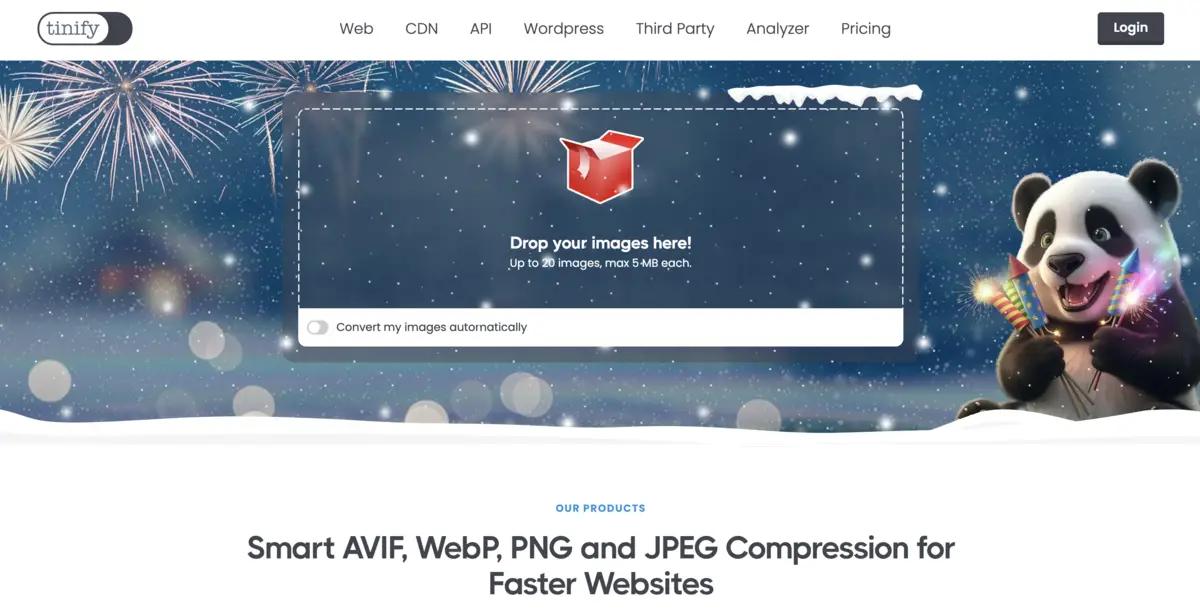
- Compress images - Use TinyPNG (free). Most business sites have massive uncompressed photos killing load times
- Enable caching - WordPress: install WP Super Cache plugin (free). Other platforms: check your host's dashboard for caching options
- Remove unused plugins - Each plugin adds load time. Deactivate anything you don't actively use
- Use a CDN - Cloudflare's free tier works fine for small sites
Every second of load time costs you visitors and rankings. Sites loading in under 2 seconds rank significantly better than 5-second sites.
Mobile Problems (30 minutes)
58% of searches happen on mobile. Pull up your site on your phone right now. Problems you'll likely find:
- Text too small to read
- Buttons too close together to tap accurately
- Forms that require zooming
- Pop-ups that cover content and are hard to close
- Horizontal scrolling
Fix these immediately. Google's mobile-first indexing means your mobile site IS your real site now.
The Low-Hanging Fruit Audit
Missing meta descriptions - These don't directly affect ranking but improve click-through rates. Higher CTR signals quality to Google. Write compelling 150-character summaries for your key pages.
Broken links - Use Dead Link Checker (free). Fix or redirect any 404s. Broken links hurt user experience and waste crawl budget.
Missing alt text - Every image needs descriptive alt text. Helps SEO and accessibility. Go through your top 10 pages and add it.
Duplicate titles/descriptions - If 5 pages have the same title tag, Google doesn't know which to rank for what. Make each page unique.
These fixes take a weekend but often unlock rankings that were impossible before. A site with technical problems won't rank no matter how good the content is.
The DIY vs. Outsource Decision
Your time has a dollar value. If you make $60/hour, spending 20 hours monthly on SEO costs you $1,200 in opportunity cost.
DIY makes sense when:
- You're pre-revenue and genuinely have more time than money
- You enjoy writing and learning SEO
- Your niche is so specific that only you can create the content
Freelancers make sense when:
- You're making $50k+/month and want hands-on quality control
- You're in a regulated field (legal, medical) requiring expert review
- You can afford $2,000+/month on content
Automation makes sense when:
- Content volume is your bottleneck
- You want the entire workflow automated (keyword research → content → publishing)
- You need consistent output without ongoing time investment
- You're spending 10+ hours monthly on tasks that could run automatically
Most small businesses either can't afford freelancers or can't sustain DIY long-term. That's why end-to-end automation has become the default for small businesses serious about SEO - it's the only model that works at $200/month budgets while handling keyword research, content creation, and publishing automatically.
The 90-Day Roadmap
Most businesses approach SEO randomly. They write an article, try some link building, fix a technical issue, then wonder why nothing works. SEO requires a system.
Days 1-30: Foundation
Week 1:
- Set up Google Search Console and Analytics (both free)
- Claim and fully optimize Google Business Profile
- Run PageSpeed test, identify 5 worst issues
- List 30 competitor pages ranking for keywords you want
Week 2:
- Fix technical issues from week 1
- Create location pages if serving multiple areas
- Submit sitemap to Search Console
- Set up weekly review tracking (15 minutes)
Week 3-4:
- Research 50 long-tail keywords you can realistically rank for (manually using Google's features, or let automation tools like Soro handle this automatically)
- Analyze competitor content for 10 priority keywords
- Create content calendar
- Decide: DIY, freelance, or automate content production
What you'll have: Clean technical foundation, local presence, keyword strategy
Days 31-60: Content Production
Goal: 15-20 published articles targeting priority keywords
If DIY: Write 2-3 articles per week
If freelance: Hire for 4-5 articles weekly
If automated: Configure brand voice and target keywords, system handles research + writing + publishing daily
Also do:
- Add internal links between new articles
- Start HARO responses (30 minutes daily)
- Reach out to 10 local partnership targets
- Monitor Search Console for early ranking signals
What you'll have: Content foundation, starting to rank for easiest keywords
Days 61-90: Momentum
- Continue publishing consistently
- Update any articles stuck at positions 8-15 (easy wins)
- Implement "better resource" backlink outreach
- Double down on topics showing traction
- Get 20+ Google reviews
What you'll have: Measurable traffic, some rankings, compounding momentum
Days 90+: Scale What Works
By day 90 you'll know:
- Which content topics drive traffic
- Which keywords you can actually rank for
- Which traffic sources convert to customers
Do more of what works. Cut what doesn't. SEO compounds - month 4 builds on month 3 builds on month 2. The businesses that win just maintain consistency when others quit.
The Content Volume Problem (And How to Solve It)
Here's the math that kills most small business SEO:
- You need 8-12 quality articles per month minimum to see traction
- Each article takes 4-6 hours to research and write properly
- That's 32-72 hours monthly just on content
- Hiring writers costs $150-300 per article ($1,200-3,600/month)
Most small businesses can't afford either the time or the money. This is why they publish sporadically, rankings stall, and they quit.
The Three Real Options
1. DIY Content
Best for: Pre-revenue businesses, founders who enjoy writing
Reality check: You'll publish 2-4 articles monthly if you're disciplined. It works but takes 12+ months to see meaningful traffic. If your time is worth $50+/hour, you're spending $600-1,200/month in opportunity cost.
2. Freelancer Content
Best for: Businesses making $20k+/month who want complete control
Reality check: Good freelancers cost $200-400 per article. At 8 articles/month that's $1,600-3,200. You'll also spend 5-10 hours monthly managing them. Quality is high but expensive.
3. Automated Content at Scale
Best for: Businesses where content is the bottleneck, not strategy
Reality check: Modern AI tools trained on 100k+ real articles and continuously updated by professional content writers can match freelancer quality at 5-10% of the cost. The technology has matured significantly.
Platforms like Soro handle the entire pipeline automatically: keyword research to find opportunities you can actually rank for, content generation that adapts to your brand voice and Google's algorithm changes, and direct auto-publishing to your CMS. It's the full workflow - research, write, publish - running on autopilot while optimizing for both Google and ChatGPT search.
The stigma around "AI content" comes from 2021-era tools that produced obvious garbage. Current systems (when properly configured) are indistinguishable from human writing because they're trained on massive datasets and refined by real content professionals monitoring what actually ranks.
Cost comparison for 30 articles/month:
- DIY: 120-180 hours (unsustainable)
- Freelancers: $4,500-9,000
- Quality automation: $200-500
The automation path removes every bottleneck. You provide direction (your industry, your angle, your brand guidelines) and the system executes everything - no manual keyword spreadsheets, no hours writing, no copying content into WordPress.
The Free Backlink Strategies
Backlinks are hard to build at scale without budget. But small businesses can get 10-20 quality links with effort instead of money:
Local Partnerships
Partner businesses serving the same customers but not competing:
- Wedding venue ↔ photographer ↔ caterer ↔ florist
- Accountant ↔ lawyer ↔ business consultant
- Gym ↔ nutritionist ↔ physical therapist
Create a "recommended partners" page linking to each other. Each link helps rankings and sends real referral traffic.
Industry Directories
Not the spammy "submit to 1000 directories" services. Target legitimate, industry-specific directories:
- Local Chamber of Commerce
- Better Business Bureau
- Industry associations (ABA for lawyers, AIA for architects)
- Yelp, Yellow Pages (yes, they still matter for local)
These take 2-3 hours to complete but last forever.
The "Data & Quote" Pitch
Reporters need sources. Be one:
- Sign up for HARO (free)
- Get 3 daily emails with journalist requests
- Respond when your expertise matches
- Provide genuine insights (not pitches)
Even a 10% response rate gets you 1-2 backlinks monthly from real publications. These are valuable - journalist links are exactly what Google wants to see.
The "Better Resource" Method
Find competitors' backlinks by searching for their content and seeing who references it. Google "[competitor topic] + link" or "[competitor topic] + source".
Look for links to outdated or thin content.
Email the linking site: "Hey, noticed you link to [old resource]. We created a comprehensive updated guide covering [topic] - might be useful for your readers."
20% success rate is realistic. If you identify 50 potential link opportunities, you can get 10 by creating better resources and making people aware of them.
What Not to Waste Money On
Every dollar counts at small scale. Avoid these:
"SEO packages" under $200/month - If they're doing comprehensive SEO for $99/month, they're either not doing it or doing things that hurt you. Real SEO requires work. At that price point, you're getting automated spam or nothing.
Link building services - "Get 100 backlinks for $500" means low-quality spam links that risk penalties. Every legitimate SEO will tell you this, but desperate businesses keep buying them.
Enterprise SEO tools you won't use - Premium tools cost $99-299/month and are powerful - if you use them daily. For most small businesses starting out, you don't need expensive subscriptions. Focus on execution first, advanced tools later.
"Guaranteed rankings" - Nobody can guarantee Google rankings. Anyone promising #1 positions is either lying or using black-hat tactics that'll eventually get you penalized.
Content you can't sustain - Hiring a writer for $1,500/month might get you 5 great articles. But if you can only afford it for 3 months, you're better off choosing a sustainable model (DIY or automation) you can maintain for a year.
Vanity metrics - Ranking #1 for a keyword nobody searches is worthless. Traffic that doesn't convert is just numbers. Focus on keywords with commercial intent that actually drive business.
Making the Case Internally
If you need to justify SEO investment to a partner or boss:
Show the competitor gap: Search your main service keywords. Your competitors on page one are getting customers you're not. That's not random - they invested in SEO.
Run the math:
- Google Ads: $1,000/month = 150 clicks = stops when you stop paying
- SEO: $200/month = builds an asset = compounds indefinitely
- At 2% conversion and $800 customer value: Even 1,000 monthly visitors = $16,000 customer value
Timeline expectations:
- Months 1-3: Foundation building, minimal visible results
- Months 4-6: First rankings, early traffic
- Months 7-12: Meaningful traffic growth
- Year 2+: Exponential compounding
The alternative: Keep relying on referrals and hoping people find you. Or keep spending on ads that stop working the moment you stop paying. Neither builds long-term value.
SEO isn't an expense - it's building an asset that generates customers automatically. The only question is when you start, not whether.
What to Do Right Now
Stop reading, start executing:
Today (2 hours):
- Claim/complete your Google Business Profile
- Run PageSpeed Insights, note top 5 issues
- List 10 competitor articles outranking you
- Set up Google Search Console if you haven't
This week (5 hours):
- Fix worst technical issues (image compression, caching)
- Create location pages if relevant
- Research 30 long-tail keywords (or set up automated keyword research with tools like Soro)
- Decide your content approach (DIY/freelance/automation)
This month:
- Publish 10-15 articles targeting your keywords
- Get 5 Google reviews
- Reach out to 3 potential local partners
- Sign up for HARO, respond to 10 queries
Next 90 days:
Execute the roadmap. Track rankings weekly. Adjust based on what works.
The gap between businesses ranking on page one and those invisible on page five isn't talent or budget. It's execution. They did these things consistently. You can too.
The customers searching for your services right now are finding your competitors because your competitors did SEO and you didn't. That changes today.